What a Continuous Glucose Monitor Actually Shows You on a Low Carb Diet
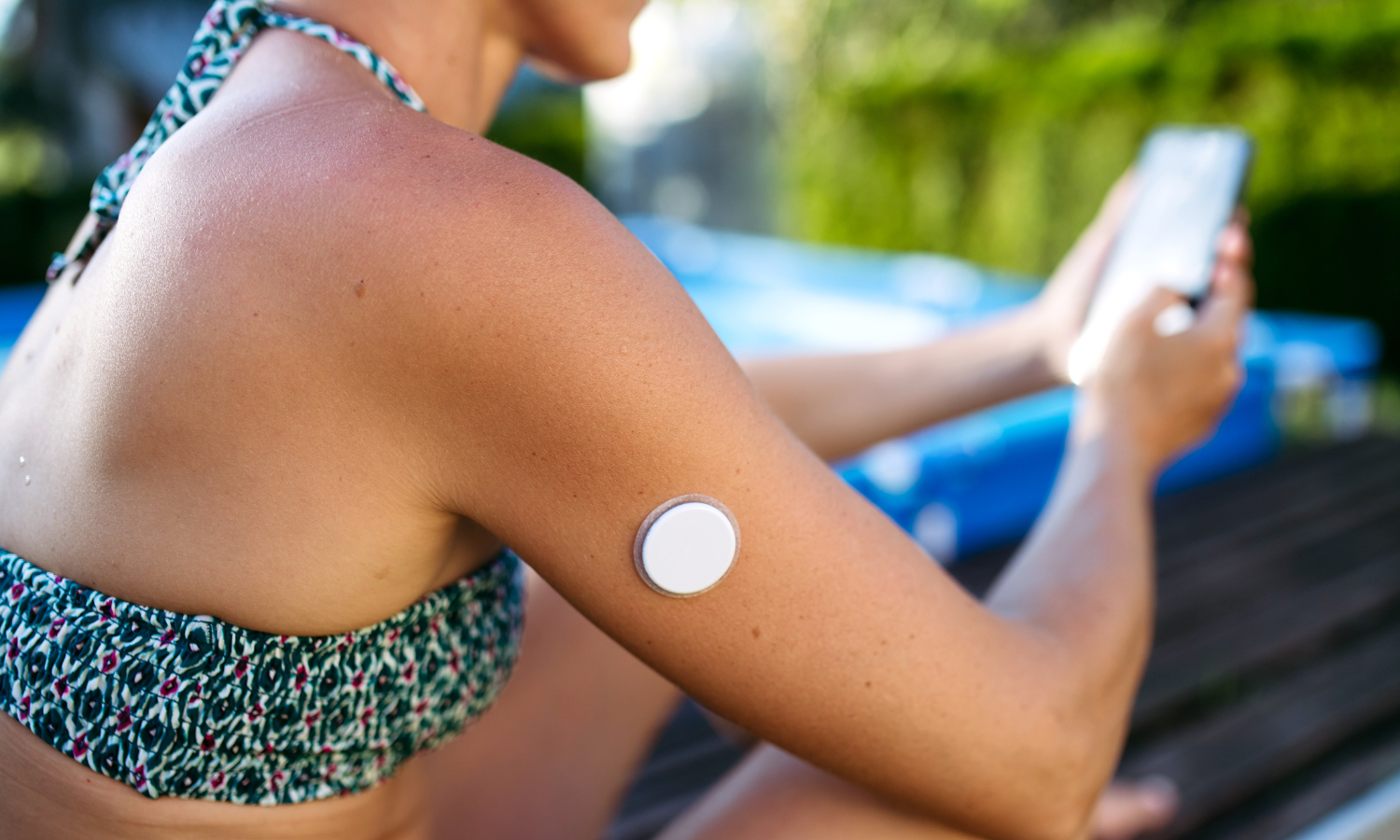
A continuous glucose monitor used to mean a diabetes diagnosis and a prescription. That changed in 2026. Dexcom Stelo and Abbott Lingo cleared the FDA for over the counter sale, and now anyone over eighteen can wear one without a doctor's note. Wellness companies picked up on this fast. Search interest in glucose monitoring for non-diabetics has climbed all year.
I've used a glucose meter for a long time, though mine is a Keto-Mojo, a fingerstick device I use to check my blood at specific points in the day rather than continuously. Watching where my numbers land after different meals is part of how I learned what insulin resistance actually feels like in my own body, long before I had language for it. So when I see a device category built entirely around this idea go mainstream, I pay attention. Here is what a CGM actually measures, what it tends to show people eating low carb, and where the hype outruns the science.
How a CGM Actually Works
A continuous glucose monitor sits under your skin with a small filament that reads glucose in the fluid between your cells, not directly in your blood. A sensor on your arm or abdomen sends a reading to your phone every few minutes. Because the device reads interstitial fluid rather than blood, there's a lag of five to fifteen minutes behind what's happening in your bloodstream. For spotting broad patterns across a day or a week, that lag doesn't matter much. For catching the exact peak of a spike, it does.
Most CGMs report a rolling number and a graph. You watch the line rise after you eat and fall as your body clears the glucose. Steep, tall spikes followed by a hard drop are one pattern. A flat line that barely moves is another. Those two pictures tell very different stories about what's happening with your insulin.
Why This Went Mainstream Now
Before 2026, insurance and prescriptions gated CGM access almost entirely to people with diagnosed diabetes. The FDA clearance of Stelo and Lingo removed that gate. Anyone curious about their own metabolism can now buy a sensor at a pharmacy or online and wear it for two weeks at a time.
That timing matters. More people are hearing the words insulin resistance for the first time and wanting proof in their own data rather than taking someone else's word for it. A CGM gives you that proof directly. You eat something, and within an hour you see what your body did with it. No lab visit, no waiting on results.
What Research Shows in People Without Diabetes
The research on CGM use in non-diabetics is still young, but a few findings stand out.
A study in Metabolism, Clinical and Experimental followed healthy adults using CGM and found that glucose excursions into the diabetic range showed up in fifteen percent of people with no diabetes diagnosis at all, and in thirty six percent of people with prediabetes. The same research linked lower carbohydrate content and the presence of protein in a meal to smaller swings in glucose. That's a finding worth sitting with. Even in people considered metabolically healthy, food composition changes how much the glucose curve moves.
A separate prospective study followed nearly five hundred non-diabetic adults over six years and tracked which glycemic variability metrics predicted who went on to develop diabetes. The people who eventually developed diabetes had significantly higher variability scores at baseline, years before diagnosis, and standard deviation of glucose was the strongest single predictor. In plain terms, a wobbly glucose curve today can show up before a diabetes diagnosis exists on paper.
A systematic review looking at CGM and cardiovascular risk in non-diabetics found that glucose swings within what's normally considered a safe range still carry consequences for blood vessel health. The proposed mechanism runs through oxidative stress and damage to the lining of blood vessels. A number on a lab report can look fine while the pattern underneath it is already telling a different story.
What I See Wearing a Glucose Meter on Low Carb
Here's where I want to be direct with you about what my own numbers look like, because that's the whole point of this article and I don't want to speak in generalities when I have real data to point to.
Two mornings ago, my fasting glucose came in at 89 with ketones at .3. The next morning, same protocol, zero carbs, no dairy, protein and fat only, one meal a day, sleep about the same both nights, my glucose read 101. Ketones held steady at .3.
Nothing in my food had changed. That twelve point jump had a different explanation. I traced it back to a disagreement I'd had the day before that was still sitting with me. Stress hormones like cortisol tell your liver to release stored glucose, whether the stress comes from a real threat or a conversation you can't stop replaying in your head. My body treated an argument the same way it treats danger, and released sugar I hadn't eaten.
Later that same day I ran a deliberate test. I don't eat three meals a day and I don't eat fruit or vegetables, chocolate isn't part of my normal eating at all, but I wanted to see what my body would do with real sugar in it after ten years of low carb and carnivore. At three in the afternoon I ate two burger patties and half a chocolate bar. By five thirty, glucose read 97 and ketones read .2. Even with actual sugar sitting in that chocolate, my numbers landed close to where they'd started that morning.
That result is the part worth paying attention to. A decade of eating this way has changed how my body handles carbohydrate when it does show up. My insulin response has normalized to the point where a real sugar hit barely moved my glucose. That's not something you'll see on day one of going low carb. It's what years of keeping insulin low can do.
That's also the piece a lot of people miss when they start testing. You expect food to be the only variable moving the needle. It isn't. Sleep quality, training, illness, dehydration, your hormonal cycle, and stress you're still carrying from yesterday all show up in that number too. A meter doesn't just teach you what food does to your body. It teaches you what everything else does to it as well.
What This Means If You Still Eat Carbs
You don't need to eat carnivore or even strict keto for a CGM to teach you something useful. If you're eating a more typical mix of meat, vegetables, some fruit, and grains, the device will show you exactly which of those foods spike you hardest. For most people that turns out to be bread, pasta, cereal, and anything sweetened, even the versions marketed as healthy. A CGM won't tell you to eat differently. It just shows you the receipts.
That's really the whole point of wearing one. You get a firsthand view of what's happening inside your body, glucose and insulin responding to what you just ate, instead of guessing based on how you feel or what a generic food chart tells you. Seeing that line move on your own data is what makes people actually change something. Seeing is believing, and once you've watched your own glucose spike after a food you thought was harmless, you have real information to act on instead of a rule you're just supposed to trust.
If you're not ready to go low carb, wearing a CGM for two weeks is still worth doing. You'll likely notice that pairing carbohydrate with protein and fat blunts the spike compared to eating it alone, that a walk after a meal brings the line down faster, and that stress and poor sleep move your glucose even on days when your food doesn't change. None of that requires cutting anything out. It just gives you information you didn't have before.
Where the Hype Gets Ahead of the Science
Not every conclusion floating around wellness circles is backed by solid evidence. The research connecting CGM-guided changes to hard outcomes like heart attacks or strokes in non-diabetics is still thin. A recent systematic review noted that while CGM shows promise for personalizing lifestyle choices, direct evidence tying that to reduced cardiovascular events remains limited, and called for longer trials before drawing firm conclusions.
That gap makes sense when you think about what the device actually does. A CGM isn't a treatment. It doesn't lower your risk of anything on its own, and wearing one won't prevent a heart attack by itself. What it gives you is information, a direct look at how your glucose and insulin respond to what you eat. What you do with that information is what changes the outcome. Once you can see a pattern instead of guessing at it, you're in a position to act on it, whether that means changing a meal, changing how often you eat, or noticing a habit that's been working against you the whole time.
There's also a real cost to consider. Continuous sensors run into the hundreds of dollars a year if you wear one long term, while a simple glucometer and test strips cost a fraction of that for spot checks. That's worth weighing against what you're comparing it to. A GLP-1 prescription runs $900 to $1,300 a month at retail without insurance, well over $10,000 a year, and a hospital stay for a cardiac event or a diabetes complication costs far more than that. If the information from a sensor helps you make changes that actually stick, the cost of wearing one for a few months looks small next to what it can help you avoid down the road.
For some people, watching every fluctuation in real time creates anxiety around food rather than clarity. If you notice that happening to you, stepping back to periodic finger stick checks instead of full time wear is a reasonable choice.
What matters more than the device itself is keeping track of what's around each number. A glucose reading on its own only tells you so much. Write down what you ate, when you slept and how well, what you trained, and what was going on emotionally that day. That's what turns a string of numbers into a pattern you can actually read, and it's the only way to tell whether a spike came from your food or from something else entirely.
The Bottom Line
A continuous glucose monitor doesn't diagnose anything on its own and it isn't a requirement for eating well. What it does is turn an abstract idea, insulin resistance, into a line on a graph you can watch move in real time. For years I've told people that food is the lever that matters most for metabolic health. A CGM is one of the clearest ways to watch that lever work.
Frequently Asked Questions
Do I need a prescription to get a CGM in 2026? No, not for the over the counter models. Dexcom Stelo and Abbott Lingo are both FDA cleared for sale to anyone eighteen or older without a prescription. Medical grade CGMs designed for diagnosed diabetics still require one.
Is a CGM more accurate than a fingerstick blood glucose meter? Not necessarily more accurate. A CGM reads glucose in interstitial fluid rather than blood, which creates a five to fifteen minute lag behind your actual blood glucose. A fingerstick meter gives you a precise reading at that exact moment. CGMs are better for spotting trends over hours and days. Fingersticks are better for a precise single number.
Can other health conditions affect my glucose readings besides diet? Yes. Illness and infection raise cortisol and can push glucose up even on a clean zero carb day. Thyroid conditions, PCOS, and other hormonal imbalances change how your body handles blood sugar. Certain medications, including steroids, also raise glucose independent of food. If your numbers stay elevated for weeks despite a consistent low carb approach, that's worth bringing to a doctor rather than assuming your diet is the problem.
Is glucose variability something to worry about if my fasting glucose and A1c are normal? The research suggests it's worth paying attention to. Studies have found that glucose swings can predict future diabetes risk and are linked to cardiovascular risk markers even when standard lab numbers look normal. A CGM can catch a pattern years before it shows up on a standard blood panel.
How long should I wear a CGM to learn something useful? Most people get useful information from a two week sensor, which is the standard wear time for the over the counter models. That's enough time to test different meals, notice how exercise and sleep affect your numbers, and spot repeating patterns.
References
Fabbri, A., et al. Continuous glucose monitoring in a healthy population: understanding the post-prandial glycemic response in individuals without diabetes mellitus. Metabolism, Clinical and Experimental. 2023.
Systematic review authors. Use of Continuous Glucose Monitoring in Non-diabetic Individuals for Cardiovascular Prevention: A Systematic Review of Its Impact on Guiding Lifestyle Interventions. PMC. 2025.
Non-Invasive Continuous Glucose Monitoring in Patients Without Diabetes: Use in Cardiovascular Prevention, A Systematic Review. PMC. 2025.
Parameters of glycemic variability in continuous glucose monitoring as predictors of diabetes: a prospective evaluation in a non-diabetic general population. PMC. 2025.
Keshet, A., et al. CGMap: characterizing continuous glucose monitor data in thousands of non-diabetic individuals. Cell Metabolism. 2023;35:758-769.
This article is for informational purposes only and does not constitute medical advice. Talk to your doctor before making changes to your diet or starting to use a glucose monitoring device, especially if you take insulin or other medications that affect blood sugar.