I Tried Ketone IQ. It Worked. But There Is a Question Nobody Is Asking.
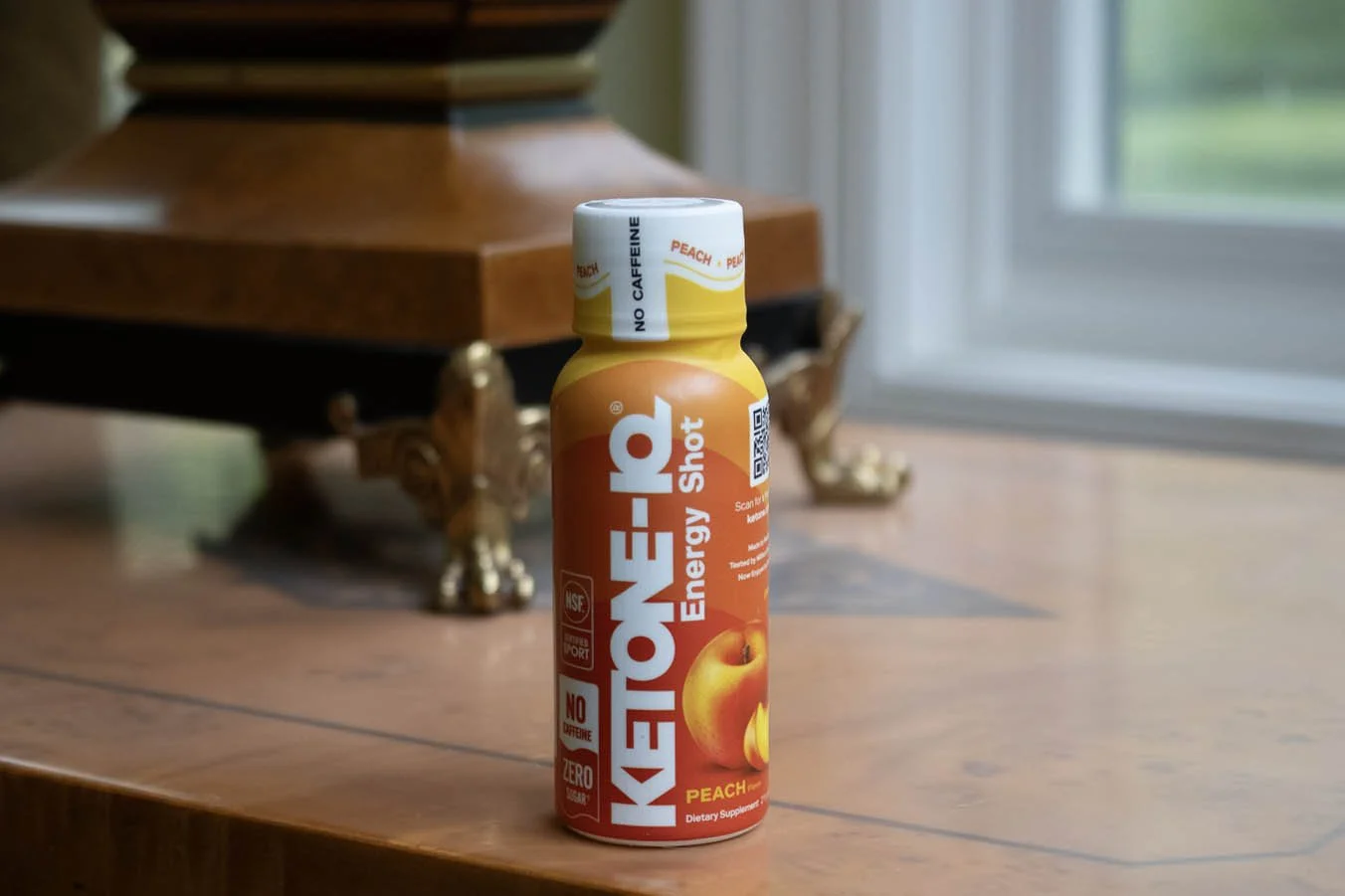
I am not a scientist. I am someone who pays attention, reads research, and gets suspicious when a supplement gets popular faster than the long-term studies can follow it. So when Ketone IQ kept coming up in conversations I respect, I decided to try it myself and look carefully at what we actually know.
I eat a very low carb diet. Nearly zero carbs most of the time. That detail matters, and I will come back to it.
What I found was more interesting than I expected. The product works, at least in the short term. But there is a question sitting underneath all the positive press that I think deserves a direct look, and I am not seeing anyone ask it.
What It Is
Ketone IQ is made by a company called HVMN, which rebranded to Ketone IQ in 2024. No caffeine, no sugar, one active ingredient: a compound called R-1,3-Butanediol. Your liver converts it into D-BHB, Beta-Hydroxybutyrate, which is the form of ketone your body and brain actually use for fuel.
Your body produces ketones naturally when you fast or cut carbohydrates significantly. That state is called ketosis. Ketone IQ delivers ketones from outside the body, without requiring any dietary change. That is the entire premise, and also where things get interesting.
The company holds a $6 million research contract awarded by United States Special Operations Command to study how ketones affect cognition and physical performance under demanding conditions. That research ran from 2019 through 2023. Ketone IQ also has a partnership with Visma-Lease a Bike, a UCI World Tour cycling team that competes in the Tour de France. These are not organizations that spend money on things that do not work.
What I Actually Noticed
I took it as shots, mostly in the morning. Within the first week, two things stood out.
I was not hungry. Not in a forcing-it way, but genuinely not interested in food until early afternoon. This is documented. Ketone supplements lower plasma ghrelin, the hormone that drives hunger. An Oxford study confirmed that after consuming a ketone drink, blood BHB levels rose significantly within 60 minutes, and hunger, ghrelin, and desire to eat were all suppressed for up to 1.5 hours after.
The second thing was sleep. Over two weeks I noticed I was falling asleep faster and waking up less. My sleep felt more solid. The likely explanation is blood sugar stabilization. One of the most common causes of disrupted sleep is glucose dropping overnight, which triggers a stress response that pulls you into lighter sleep stages. Ketones give your brain a steady fuel source that does not depend on glucose staying elevated. Less volatility, fewer disruptions. Johns Hopkins and the U.S. military are both running active trials on ketones and sleep quality. Researchers do not build trials around nothing.
The energy was real too. Steady, without the edge that caffeine brings. Research confirms that ketones generate meaningfully more ATP per unit of oxygen than glucose does, making them a more efficient fuel source. They also cross the blood-brain barrier directly, fueling the brain in a way that does not depend on insulin signaling. Blood ketone levels after a single serving stay elevated for up to four hours.
Why My Diet Matters Here
Because I eat very low carb, the product works exactly as the underlying biology intends. When you are already low on glucose, ketones step in cleanly. One fuel source hands off to another. The metabolic logic is intact.
But I started thinking about the people who are not eating the way I eat. Most people are not. Most people eat carbohydrates regularly, and many eat a lot of them. I went looking to understand what happens in that case, specifically whether the Randle cycle creates a problem when you add exogenous ketones on top of a standard diet. And I wanted to know if the company addresses this anywhere.
They do not. At least not prominently.
The Question Nobody Is Asking
When you take exogenous ketones without changing your diet, something metabolically unusual happens. You end up with both elevated glucose and elevated ketones in your bloodstream at the same time. That does not happen naturally. In natural ketosis, ketones rise precisely because glucose is scarce. The body was not designed to run both systems simultaneously.
Researchers call what follows a Randle cycle-like effect. Your cells have to choose between fuel sources, and ketones win. Studies confirmed that ketones suppress glycolysis by inhibiting pyruvate dehydrogenase, the enzyme responsible for processing glucose for energy. Glucose that your cells do not burn gets rerouted instead, primarily into glycogen storage in your muscles and liver.
For a healthy person in the short term, that sounds manageable. And it largely is. Studies show exogenous ketones actually lower blood glucose rather than letting it build up dangerously. They appear to limit how much glucose the liver produces and push more glucose uptake into peripheral tissues. In people with type 2 diabetes, this effect is strong enough that researchers are actively studying ketone supplements as a therapeutic tool for blood sugar control without requiring dietary restriction.
So the immediate picture is not alarming. The glucose gets dealt with.
What We Do Not Know
Here is the part that I think should be more visible.
Nobody has studied what happens when a metabolically average person on a standard American diet takes exogenous ketones daily for two years. Or five years. The long-term data for that specific user simply does not exist.
What we know is that the body was not designed to run both fuel systems simultaneously. What we do not know is whether chronically asking it to do so creates a cost that only shows up later. Glycogen tanks fill up. Metabolic signaling adapts. Enzymes regulate differently over time. These are not hypothetical concerns, they are the kinds of changes that take years of consistent exposure to reveal, and nobody is currently measuring them.
The product was designed and most rigorously tested in people who are fasting, in ketosis, or eating low carb. That is the population where the metabolic logic is clean. When you are eating normally and adding ketones on top, you are operating in territory that is genuinely understudied.
That gap is not a reason to panic. It is a reason to ask the question.
What the Company Does Not Say Clearly Enough
HVMN markets Ketone IQ broadly. The product page leads with performance, focus, endurance, sleep. That is all accurate as far as it goes. But nowhere prominent does it say: this product was developed and tested primarily for people in a low carbohydrate or fasted state, and what happens when you use it daily on top of a standard diet over the long term is not yet known.
I went specifically looking for whether the company addresses the Randle cycle or the question of concurrent high glucose and high ketones. I could not find it in their consumer-facing materials.
That information exists in the research. It is not hidden. But it is not what you read when you are deciding whether to spend $4 to $5 per serving on a product that sounds like it does everything.
Supplements do not require FDA approval, and Ketone IQ is sold under the manufacturer's own safety determination. The short-term safety data is genuinely reassuring. Clinical studies found zero acid-base abnormalities, zero electrolyte disturbances, and adverse events in fewer than 7% of servings consumed across hundreds of doses. For healthy adults in the near term, the risk profile looks mild.
The concern is not what it does in week two. It is what we are not measuring in year three.
Who This Actually Makes Sense For
Based on everything in the research, the clearest cases are these.
People who are already eating low carb or practicing intermittent fasting. In that context, the metabolic logic is intact. Ketones are supplementing a state the body is already trying to reach. The evidence is cleanest here, and this is where I personally feel confident using it.
Endurance athletes. The strongest performance data is in aerobic, sustained effort. Ketones fuel oxidative pathways well. For sprinters or heavy strength training, the evidence is weaker.
People with cognitive decline risk or early neurological concerns. The brain research is the most compelling long-term case. As the brain becomes more insulin resistant with age, its ability to use ketones remains intact longer than its ability to use glucose. Researchers at the University of Rochester identified specific mechanisms in the hippocampal network that ketones appear to rescue. This is the area where the long-term case looks most promising, and where the research is genuinely exciting.
What I Think
I will keep using it. The sleep benefit has been consistent enough that I pay attention to it. The appetite suppression is real. For someone eating the way I eat, the metabolic context is right and the product does what it claims.
But most people picking this up at Sprouts or ordering it online are not eating the way I eat. And I think they deserve to know that the science behind it was largely built around people who do not eat the standard American diet.
I am not saying it is dangerous. The short-term data does not support that conclusion. I am saying the question of what happens chronically, in someone eating carbohydrates daily, has not been answered. And a company selling a $4 to $5 per serving supplement to a mass market should probably say so.
The question is not whether Ketone IQ works. In the right context, it does. The question is whether that context is described clearly enough for the people buying it.
Sources
Randle cycle-like effect and glucose-sparing from exogenous ketones (PMC): https://pmc.ncbi.nlm.nih.gov/articles/PMC11193512/
On the metabolism of exogenous ketones in humans, Oxford/Stubbs et al. (PMC): https://www.ncbi.nlm.nih.gov/pmc/articles/PMC5670148/
Exogenous ketosis in type 2 diabetes, safety and glycaemic control (PMC): https://pmc.ncbi.nlm.nih.gov/articles/PMC8279633/
Exogenous BHB supplementation as adjunct to low-calorie diet, metabolic markers (PMC): https://pmc.ncbi.nlm.nih.gov/articles/PMC12655410/
University of Rochester, ketones and hippocampal network rescue (May 2024): https://www.urmc.rochester.edu/news/publications/neuroscience/can-ketones-enhance-cognitive-function-and-protect-brain-networks
Exogenous ketone supplementation, emerging tool for physiologists (PMC): https://www.ncbi.nlm.nih.gov/pmc/articles/PMC10103874/
Ketone-IQ Wikipedia, military contract and partnerships: https://en.wikipedia.org/wiki/Ketone-IQ
HVMN Operation Metabolic Dominance, military research summary: https://ketone.com/blogs/blog/operation-metabolic-dominance-ketones-us-military-and-h-v-m-n
Johns Hopkins KETO-SLEEP 1 clinical trial: https://clinicaltrials.gov/study/NCT06655649
U.S. Army ketone resiliency against sleep restriction trial: https://clinicaltrials.gov/study/NCT05519644
Examine.com, exogenous ketone drawbacks and safety: https://examine.com/faq/what-are-exogenous-ketoness-main-drawbacks/
Medical News Today, exogenous ketones overview (March 2025): https://www.medicalnewstoday.com/articles/326607
Disclaimer: The content shared here is for informational and educational purposes only and should never be taken as medical advice.
In writing this blog post, my goal is to distill research findings into a clear, approachable format that encourages critical thinking and empowers you to make informed decisions about your health.