You Don't Need Supplements. You Need to Fix Your Diet.
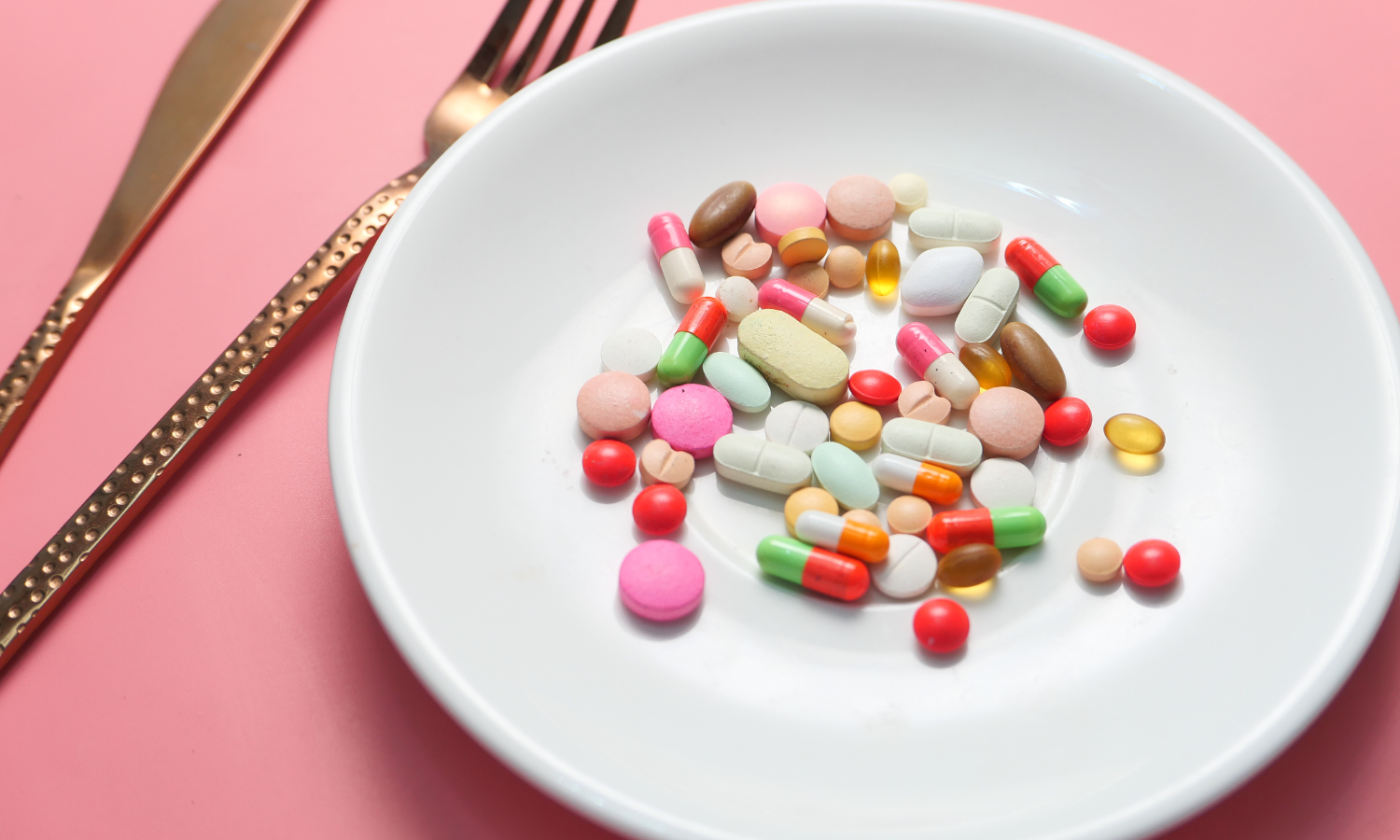
I have never trusted supplements. Not before I started eating low carb, and certainly not after. Something about them always felt off to me. The promises were too big. The labels were too confident. And the more I learned about food and how the body actually works, the more I realized my instincts were right.
The supplement industry is worth hundreds of billions of dollars. The global supplements market was valued at $378 billion in 2023 and is projected to nearly double to $745 billion by 2033. That is not a wellness story. That is a business story. And like any big business, it survives on keeping you uncertain about your own body.
Here is what I believe. If you eat a proper human diet, one that is low in carbohydrates, seed oils, and sugar, and rich in animal protein and fat, your body gets what it needs from food. Not from a pill. Not from a powder. From food. That has been my experience, and the science backs it up.
Before we get into specific supplements, it helps to understand the foundation. Supplements are not regulated the way drugs are. Companies can often introduce a dietary supplement to the market without notifying the FDA. The agency's role in regulating supplements primarily begins after the product enters the marketplace. That means no one checks what is inside that bottle before it reaches your hands. No one verifies the dose. No one confirms the ingredient is even real.
What is on the label may not be what is in the product. The FDA has found prescription drugs, including anticoagulants and anticonvulsants, in products sold as dietary supplements. A study analyzing 776 adulterated supplements found that in 97.6% of cases, the hidden drug ingredients were not declared on the label at all. These are not fringe cases. They are documented findings from federal agencies.
Beyond the labeling problem, synthetic versions of nutrients simply do not behave the same way in your body as nutrients from real food. Vitamins from animal sources are more bioavailable than vitamins from plant sources. Minerals are highly susceptible to compounds found in plants, such as phytate, polyphenols, and fiber, which can block absorption. A synthetic capsule faces the same challenge.
So let's walk through the supplements most people have in their cabinet.
Fiber
Fiber supplements are probably the biggest surprise on this list. Fiber is treated like a non-negotiable health requirement, something you absolutely must get or your gut will suffer. But that idea comes from a high-carb diet context. When you eat a lot of starchy foods, fiber helps slow the glucose hit. When you shift to a diet low in carbohydrates and rich in animal foods, your digestion works completely differently. Many people who make that switch find their digestive issues improve, not because they added a fiber supplement, but because they stopped eating the foods that caused the problem in the first place.
There is also something worth knowing about fiber and mineral absorption. Fat-soluble vitamins and minerals can actually be inhibited in diets high in fiber. It does not just move things through. It can interfere with how much your body absorbs. When your diet is built on real animal food, you tend to absorb nutrients far more efficiently. A fiber supplement adds little in that context, and may work against you.
Calcium
The fear around calcium is understandable, and the supplement industry profits from it. Adults need between 1,000 and 1,200 mg of calcium a day, and that number can sound intimidating. But full-fat dairy, sardines with bones, and eggs make it very achievable through food. One cup of whole milk yogurt alone contains 300 mg. Add cheese, fatty fish, and eggs and you are likely covering your needs before dinner.
The calcium in dairy comes packaged with the fat and protein your body needs to absorb it properly. A calcium carbonate tablet does not come with those cofactors. Real food delivers the nutrient in a form your body actually recognizes and uses.
Vitamin D
Your body produces vitamin D from sunlight, and fatty fish, egg yolks, and liver provide it through food as well. If you live somewhere with limited sun during winter, your levels may drop, and that is worth a conversation with your doctor and a simple blood test. But most people eating eggs, salmon, and spending reasonable time outdoors are covering this one without a daily capsule.
Omega-3
Sardines, mackerel, salmon, and herring give you EPA and DHA already in their active forms, ready for your body to use. Fish oil pills are a popular alternative, but Consumer Reports found that even unexpired fish oil supplements are sometimes rancid. Protein powders marketed alongside omega-3 blends carry their own concerns. Testing found that more than two-thirds of protein powders contained more lead per serving than experts consider safe for an entire day. Getting your omega-3 from actual fish sidesteps all of that.
Multivitamins
Research analyzing 619 foods found that organ meats ranked highest for nutrient density. Beef liver in particular is rich in protein, folate, iron, zinc, copper, and choline. Eating liver once a week does more for your nutrition than most daily multivitamins. The nutrients arrive in their natural form, in ratios your body recognizes, alongside the cofactors that make absorption possible. A synthetic multivitamin gives you isolated, manufactured versions of those same nutrients, often at lower bioavailability, and with no guarantee that the amounts listed on the label are accurate.
Turmeric and Curcumin
Turmeric has become one of the most popular supplements out there, and the anti-inflammatory claims are hard to ignore. But the research coming out around it is worth paying attention to. Liver injury linked to turmeric supplements is increasing in the United States, and most modern formulas include black pepper to improve absorption. The concern is that the enhanced absorption may also increase the risk of liver damage. Research published in The American Journal of Medicine documented ten cases of significant liver injury tied directly to turmeric supplements. Research from Northwestern Medicine adds that supplements designed for higher absorption appear to carry the greatest risk.
Turmeric as a spice in cooking is a different situation entirely. A small amount of ground turmeric in a dish is nothing like the concentrated dose in a supplement. The spice is not the problem. The pill is.
Ashwagandha, Collagen, Probiotics, and the Rest
The trending supplement list changes every year, which is itself worth noting. The marketing evolves constantly, but the science rarely keeps pace. A 2022 review looked at 27 ingredients frequently included in immune supplements and found evidence of effectiveness in rigorous human studies for only eight of them.
Collagen supplements are popular for skin, hair, and joints, and the idea behind them makes sense on the surface. But your body builds collagen from the protein you eat, using glycine, proline, and vitamin C. Eating meat with connective tissue, making bone broth, and including organ meats and eggs gives your body the raw materials it needs to do that job. The supplement shortcuts a process your body is already equipped to handle.
Probiotic supplements claim to improve your gut microbiome, and gut health is genuinely important. But a diet built on real whole food, free of seed oils and sugar, tends to do more for your gut environment than any capsule. When you remove the refined carbohydrates and sugar that feed harmful bacteria, the gut often starts to rebalance on its own.
A Note for Vegans: Supplementation Is Not Optional
Everything in this article applies to people who eat animal foods. If you follow a vegan diet, there are a few specific places where the rules change, and it is important to be honest about that.
Vitamin B12 is the most urgent. There are no reliable plant sources of B12, and this is one area where the research is consistent. Studies show that up to 40% of vegetarians and a higher percentage of vegans are deficient. Deficiency develops slowly, sometimes over years, and by the time symptoms like fatigue, nerve issues, or cognitive changes appear, the body has already been running on empty for a while. A B12 supplement is not optional if you eat no animal products.
Vitamin D is the second priority. People eating fatty fish and eggs get it through food. Without those sources, and without consistent sun exposure, supplementing is a reasonable and well-supported choice.
Omega-3 fatty acids are the third gap worth addressing. Plants provide ALA, but the body converts ALA to the usable forms, EPA and DHA, very inefficiently. In men, less than 8% of ALA converts to EPA and close to zero converts to DHA. Algae-based omega-3 supplements are the most practical vegan solution, and they work because algae is the original source fish draw from anyway.
Iodine, zinc, iron, calcium, and selenium can be managed with thoughtful food planning and regular blood work, but they deserve attention.
Now, none of this changes the concerns raised earlier about the supplement industry. The lack of regulation applies equally here. If you need to supplement, look for products with third-party testing certifications like NSF International, USP, or Informed Sport. These organizations test independently to verify that what is on the label is in the bottle, at the right dose, without contamination. It is worth taking the time to find a product you can actually trust.
If you eat a vegan diet, supplementing B12, vitamin D, and algae-based omega-3 is important for your long-term health. Check your levels regularly and work with your doctor to stay on top of it.
The Bottom Line
You do not need a supplement routine. You need a food routine. When you build your diet around meat, fish, eggs, dairy, and organ meats, and remove the processed foods, seed oils, sugar, and refined carbohydrates, your body gets what it was designed to run on. Real nutrients, in their natural form, from foods humans have eaten for a very long time.
The supplement industry grew because the modern diet leaves people depleted. Address the diet, and most of the supplements become unnecessary.
I never needed a pill to feel well, and I have a feeling you will not either.
References
The Brainy Insights. Nutritional Supplements Market. https://www.thebrainyinsights.com/report/nutritional-supplements-market-13585
U.S. Food and Drug Administration. FDA 101: Dietary Supplements. https://www.fda.gov/consumers/consumer-updates/fda-101-dietary-supplements
National Center for Complementary and Integrative Health (NIH). Using Dietary Supplements Wisely. https://www.nccih.nih.gov/health/using-dietary-supplements-wisely
Gaulke CA, et al. Analysis of Select Dietary Supplement Products Marketed for Immune Health. JAMA Network Open, 2022. https://www.ncbi.nlm.nih.gov/pmc/articles/PMC9366544/
Cohen PA, et al. Unapproved Pharmaceutical Ingredients Included in Dietary Supplements Associated With US FDA Warnings. JAMA Network Open, 2018. https://www.ncbi.nlm.nih.gov/pmc/articles/PMC6324457/
Frontiers in Nutrition. Micronutrient Bioavailability: Concepts, Influencing Factors, and Strategies for Improvement. 2025. https://www.frontiersin.org/journals/nutrition/articles/10.3389/fnut.2025.1646750/full
Consumer Reports. The Supplements That Could Actually Be Worth Trying. December 2025. https://www.consumerreports.org/health/the-supplements-that-could-actually-be-worth-trying-a7419737434/
Vitaquest. Fall 2025 Supplement Trends. https://vitaquest.com/fall-supplement-trends-2025/
Navarro VJ, et al. Liver Injury Associated with Turmeric: Ten Cases from the Drug-Induced Liver Injury Network. The American Journal of Medicine, 2022. https://www.amjmed.com/article/S0002-9343(22)00740-9/fulltext
Northwestern Medicine. Are Turmeric and Curcumin Supplements Safe for Your Liver? https://www.nm.org/healthbeat/healthy-tips/nutrition/Are-Turmeric-and-Curcumin-Supplements-Safe-for-Your-Liver
Smith DN, et al. Turmeric-Associated Liver Injury: A Rare Case of Drug-Induced Liver Injury. Cureus, 2023. https://www.ncbi.nlm.nih.gov/pmc/articles/PMC10149439/
Luber RP, et al. Turmeric Induced Liver Injury: A Report of Two Cases. Case Reports in Hepatology, 2019. https://www.ncbi.nlm.nih.gov/pmc/articles/PMC6535872/
The Journal of Nutrition. Nutrient Density in Foods. Cited via Carb Manager. https://www.carbmanager.com/article/y2oy0xaaaminwxtv/bioavailability-and-nutrient-density-optimizing-your
This article is for informational purposes and reflects current research in ancestral nutrition and nutritional biochemistry. Always work with a qualified healthcare provider when making significant dietary changes. Referenced research includes work from peer-reviewed journals including Nutrients, ACS Omega, and NCBI, as well as the work of clinicians including Dr. Ken Berry, Dr. Eric Westman, and Dr. Paul Mason.
Disclaimer: The content shared here is for informational and educational purposes only and should never be taken as medical advice.
In writing this blog post, my goal is to distill research findings into a clear, approachable format that encourages critical thinking and empowers you to make informed decisions about your health.